Sky Report
This is the monthly Griffith Observatory Sky Report. You may read or listen to it below.
Sky Report
October, 2026
This is the Griffith Observatory Sky Report for the period between October 1 and October 31, 2026. Here are the events happening in the sky of southern California.
All times are in Pacific Daylight Time.
On the 1st, the sun rises at 6:48 a.m. and sets at 6:37 p.m. On the 31st, the sun rises at 7:12 a.m. and sets at 6:01 p.m.
PLANETS
Mercury sets in the west-southwest at 7:31 p.m. on the 1st, and the sun sets at 6:37 p.m., 54 minutes earlier. The planet is 77-percent illuminated and 5.7 arcseconds wide. On the 22nd, the sun sets at 6:10 p.m., and Mercury sets in the west-southwest at 7:01 p.m., 51 minutes later. The planet is 38-percent illuminated and 8.1 arcseconds wide. After the 22nd, Mercury is close to the sun and is not safe to observe. A magnification of 150x is needed to see the disk of the planet. Do not observe any planet when it comes close to the sun, for the danger to the eyes is great.
Venus on the 1st sets in the west-southwest at 7:27 p.m., 50 minutes after the sun sets. The planet is close to the sun and is not safe to observe.
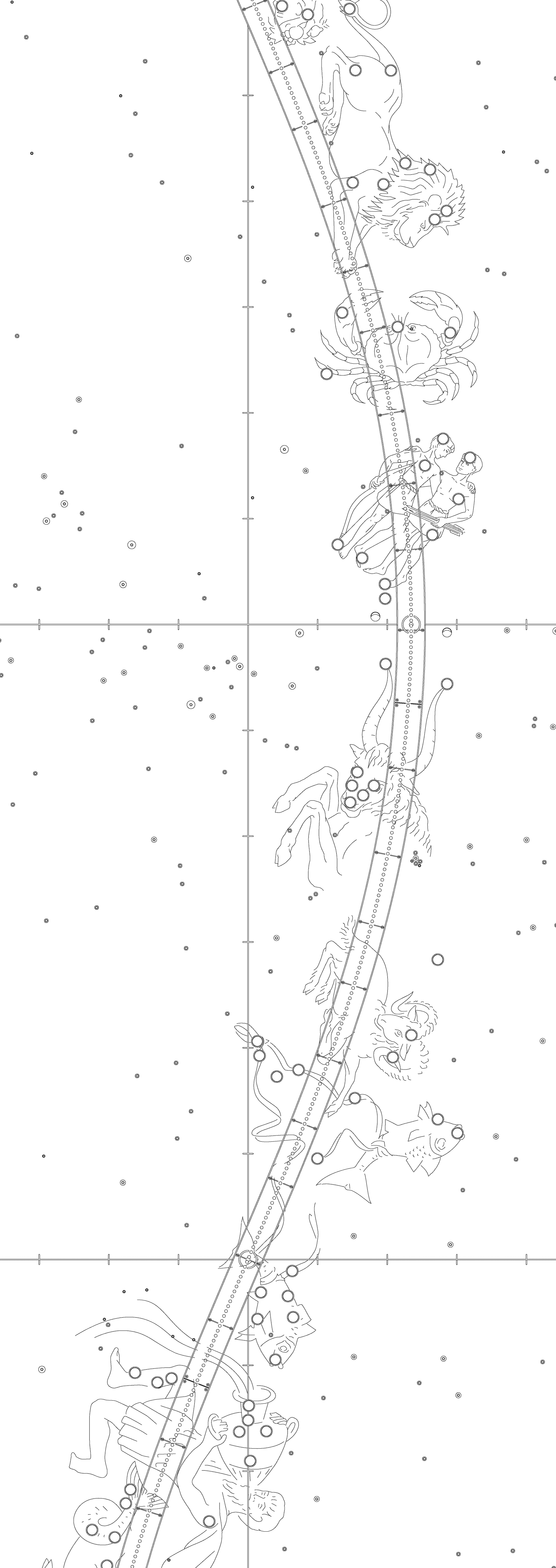
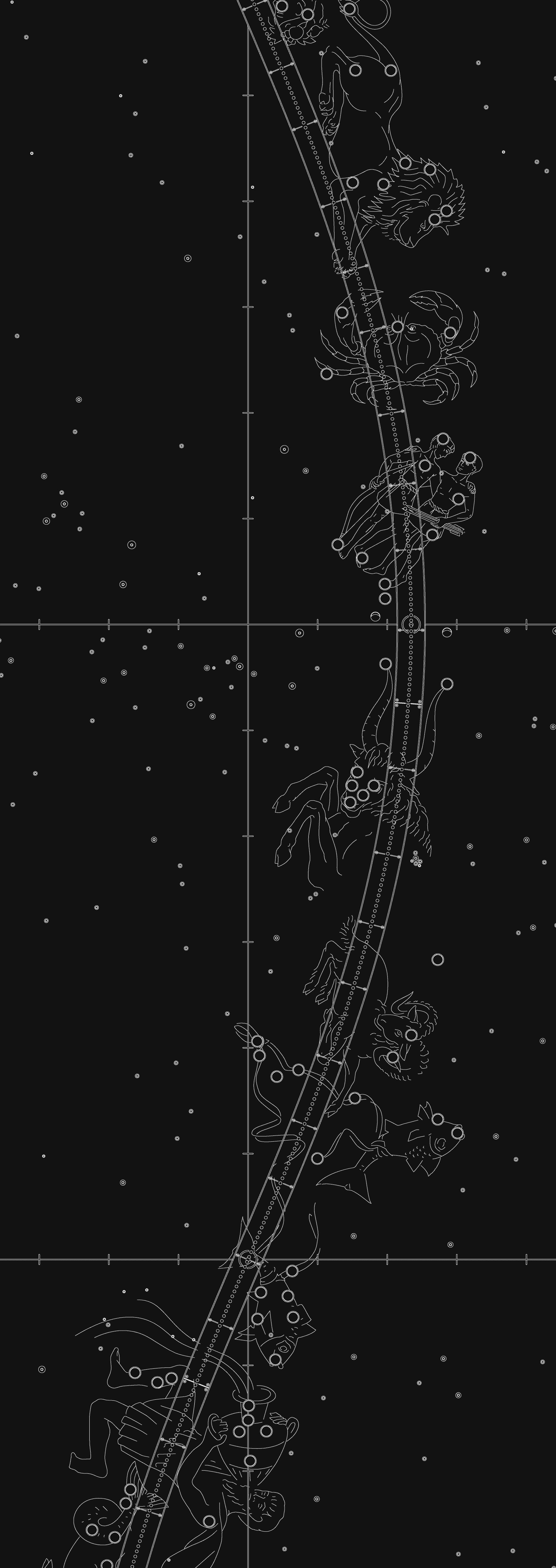
Mars is in Cancer the Crab and crosses into Leo the Lion on the 30th. The planet rises in the east-northeast at 1:28 a.m. on the 1st and is 90-percent illuminated and 5.6 arcseconds wide. On the 31st, Mars rises at 12:50 a.m. and is 90-percent illuminated and 6.5 arcseconds wide.
Jupiter is in Leo the Lion. On the 1st, the planet rises in the east-northeast at 2:56 a.m. with a disk 33 arcseconds wide. On the 31st, Jupiter rises at 1:20 a.m. with a disk 36 arcseconds wide. A telescope capable of magnification 50x will show the Red Spot, and the four bright Galilean moons can be seen moving back and forth, across and behind Jupiter.
Saturn is in Cetus the Sea Monster. On the 1st, the planet rises in the east at 6:48 p.m. On the 31st, Saturn sets in the west at 4:59 a.m. The planet is 20 arcseconds wide. The rings and Saturn’s largest moon, Titan, can be seen with a telescope capable of magnification 50x.
Uranus is in Taurus the Bull. On the 1st, the planet rises in the east-northeast at 9:21 p.m. On the 31st, Uranus rises at 7:20 p.m. On the 15th, Uranus is at Right Ascension 4h 13m 16s and declination +21° 1ʹ 10ʺ. A magnification of 150x or more is needed to see the planet’s 3.8-arcsecond disk.
Neptune is in Pisces the Fishes. On the 1st, the planet rises in the east at 6:21 p.m. On the 31st, Neptune sets due west at 4:26 a.m. On the 15th, Neptune is at Right Ascension 0h 11m 23s and declination -0° 18ʹ 51ʺ. A magnification of 150x or more is needed to see the planet’s 2.3-arcsecond disk.
The moon is at last quarter on the 3rd, new on the 10th, first quarter on the 18th, and full on the 25th.
SPECIAL EVENTS
The Orionid meteor shower is active from October 2 to November 7. The Orionids produce 10 to 20 shower members at maximum. The radiant is in the constellation of Orion the Hunter. The parent object is the famous comet 1P/Halley. The peak is on the night of October 21 – 22. The waxing gibbous moon will interfere with observations.
Mars passes in front of the large open star cluster M44 in Cancer the Crab on the 11th.
The moon passes in front of M44 on the 5th at 3:00 a.m.
Griffith Observatory normally provides free public sky observing day and night – weather permitting – through a variety of telescopes. Currently, the Observatory is open Tuesday through Sunday. To plan a visit to the Observatory, please see our website (www.griffithobs.org) for the latest information. The Sky Report, also available on the website, provides monthly observing information.
YouTube Sky Report
Lunar Calendar
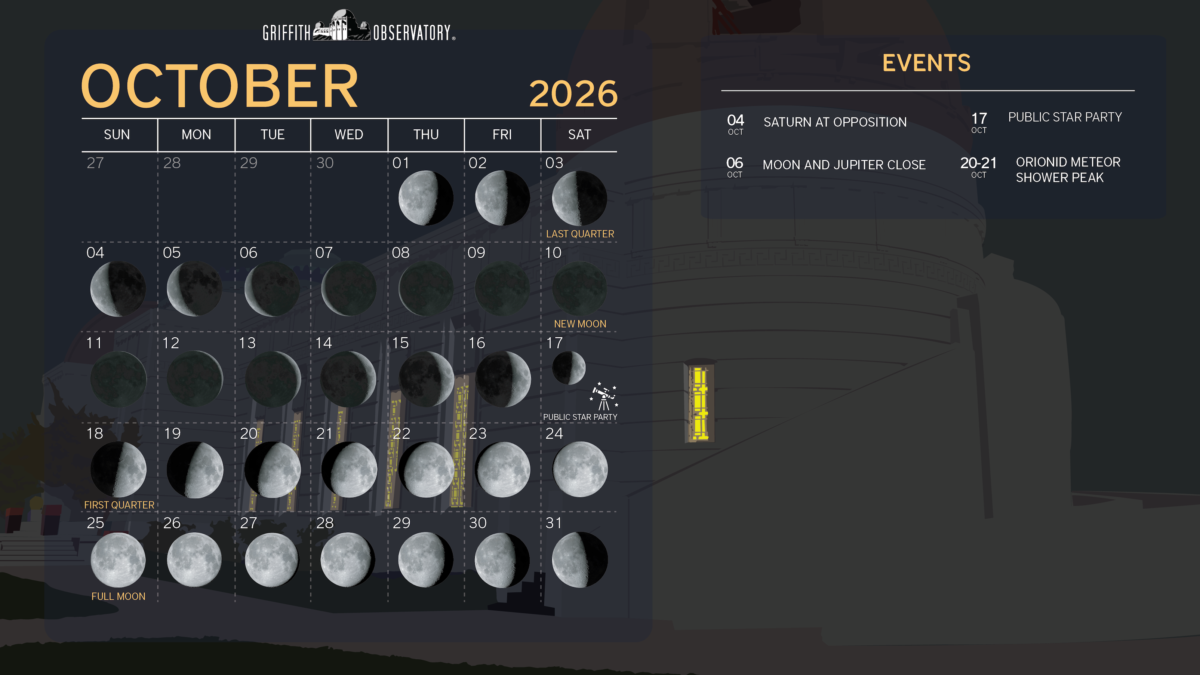
The month of October begins with the Moon waning. The New Moon on the 10th ends this cycle. From the 11th onward, the Moon is waxing which means its surface is becoming more illuminated. The Moon is full again on October 25th. The Last Quarter is on the 3rd, and the First Quarter is on the 18th.